[English text below]
Sevilla es la ciudad más romántica en la que he estado. Calles pequeñitas y amuralladas, pintorescas plazas llenas de flores, parques con fuentes pequeñas casi cada 2 cuadras, un río rodeado de flores y arboles frondosos, edificios de arquitectura barroca, carrozas con caballos muy bien cuidados, y cientos de naranjos que nos regalaban su aroma de azahares cada que salíamos a disfrutas del romanticismo de la ciudad por la noche.


El mercado de la Lonja del Barranco lo dice todo con su slogan: Cuidamos los detalles. Creo que este slogan es el de toda la ciudad; no hay una esquina descuidada o sucia en todo Sevilla, toda la ciudad esta muy bien presentada. ¡Incluso en sus parques hay palomas blancas en lugar de pichones! Me faltó cámara para tomar fotos. Pero la razón verdadera de dejar la cámara fue que Sevilla es una ciudad que preferí descubrir de la mano de Kevin en vez de tratar de tomar una imagen que no lograría capturar la esencia tan romántica de Sevilla.


Sevilla tiene lo mejor de muchos mundos, y los sevillanos están orgullosos y ponen mucho énfasis en ello. Entre las culturas que puedes descubrir con solo un vistazo a su arquitectura están la romana, la musulmana, la cristiana, y la francesa. Cuando ahondas en la historia de la ciudad te das cuenta que hay más de lo que el ojo puede observar, pues también están presentes la cultura indígena mexicana, la cultura indú, la cultura asiática, la cultura portuguesa, en fin, se dice que en un momento Sevilla fue el centro del mundo.
Y fue un placer, un respiro, estar en un lugar donde en vez de desaparecer la cultura conquistada se construye con y de ella. Los mejores testigos de esta continua evolución de Sevilla son la catedral principal de Sevilla, el Archivo General de Indias, y Real de Alcazar. Puedes ver esta transición en muchas partes, su cultura, sus bailes, su comida, etc, pero estos tres edificios son tan palpables, ricos en historia, y vivos que la UNESCO los declaro patrimonio de la humanidad.


No quiero romantizar la historia y dar la mala impresión de que el paso de una cultura dominante a la otra se hizo de forma pacifica, donde se ha visto eso, pero en lo que hago énfasis es en la conservación de aquellos atributos útiles de la cultura conquistada, el no desaparecer completamente las culturas pasadas. Esta conservación de culturas, arquitectura, y diversas tradiciones es lo que ha formado a Sevilla desde hace miles de años y lo que hace su estilo tan único.
Lo que si quiero ver con ojos románticos es a Sevilla, a esos días otoñales en los que por querer saber un poco más de mi pequeño estado, Tlaxcala, me vi en una ciudad de ensueño, una ciudad bonita, alegre, con carácter, y llena de contrastes en sus calles. Una ciudad que ha crecido sin prisa, que disfruta lo que tiene y quiere compartirlo contigo. Sevilla es para mi como una persona que conoces por coincidencia, y que de repente, te das cuenta que es la amiga que habías buscado por años por que te recuerda a tus seres queridos y al mismo tiempo es fresca, llena de información que desconocías de cosas que conocías.
La ciudad amurallada
En cuanto llegamos a Sevilla, las similitudes con Marruecos no se hicieron esperar. Sin quererlo, comencé a caer en una comparación constante entre que era “español” y que era “marroquí”. Después entre que era “español”, que “marroquí”, que “gitano”, que “gótico francés”, que “romano”, etc. Al final de mi tiempo en Sevilla, me di cuenta que estas comparaciones eran erróneas, no era un lugar con pedacitos de aquí y allá, sino, las calles, los edificios, los parques, las decoraciones, la comida y, en general, la cultura es sevillana.
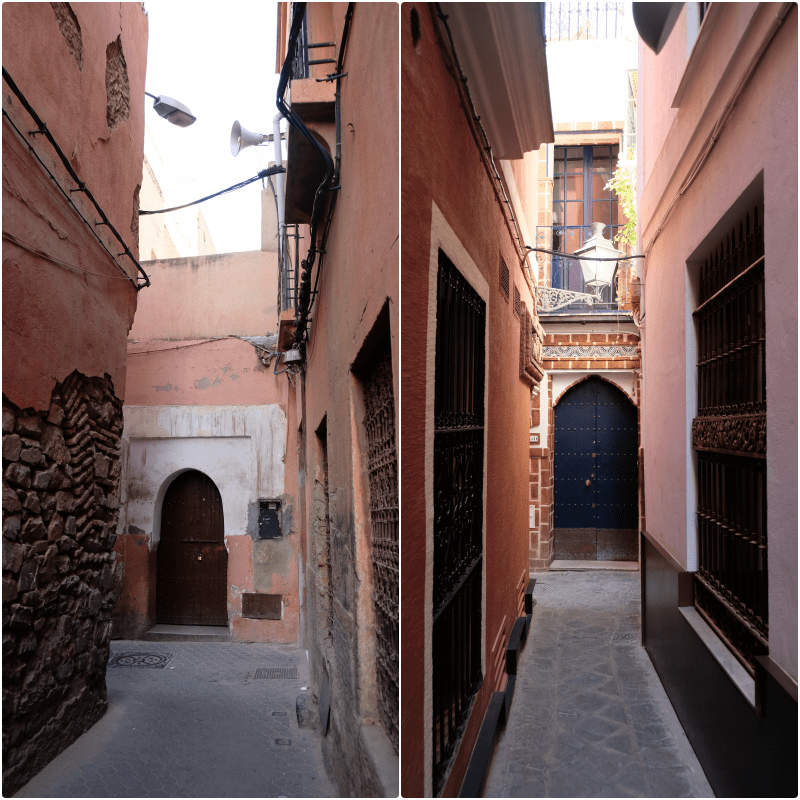
La parte central, y mas vieja, de Sevilla se encuentra entre murallas y tiene la misma estructura que una medina. Esto es porque Sevilla fue una ciudad musulmana. Toda la Peninsula Ibérica estuvo bajo el poder musulmán durante la edad media, comenzando el periodo conocido como Al-Ándaluz cerca del año 711, pero no fue hasta el 1023 que Sevilla obtuvo su independencia definitiva, y constituyo su propia taifa (algo como un reinado), siendo aún de influencia musulmana. Aunque después Sevilla fue cristianizada, el centro de la ciudad se conservó y las murallas sirvieron a los españoles para su propia defensa; sin embargo, ya no se refirieron a ella como “medina” sino paso a ser una “ciudad amurallada”.
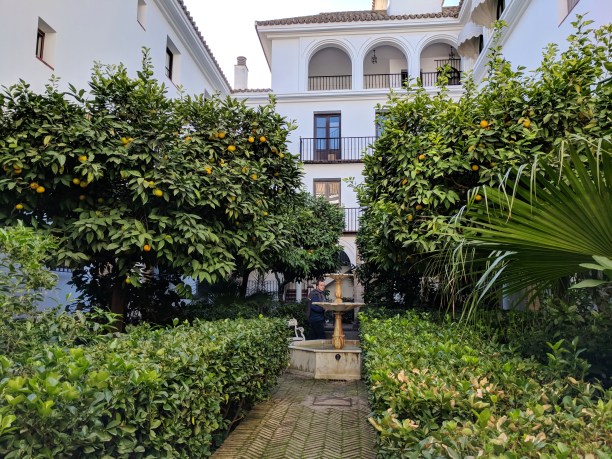
Ahora, las murallas de Sevilla no se ocupan como defensa contra ataques enemigos, pero la ciudad amurallada de Sevilla es perfecta para el romance. Sus calles pequeñas y empedradas, sus jardines y plazas llenas de naranjos y flores multicolores, sus callejones con fuentecitas, y sus miles de balcones por toda la ciudad te llevan a soñar en la perfección del amor y el romance. Por eso agradesco que pude descubrir esta ciudad de la mano de Kev, deteniéndonos a oler los jazmines y azahares en nuestras caminatas nocturnas; donde a diario descubrimos una nueva plasita con su fuente, perfecta solo para los 2, para sentarnos a escuchar el correr del agua mientras disfrutábamos del aire fresco y la Catedral de Sevilla iluminada. Mientras la Giralda, dorada y brillante, en lo más alto de la ciudad nos decía (y seguro a todos aquellos que rondan las calles por la noche): Aquí los cuido. Déjenme participar de su romance, si alguien viene a molestaros you les aviso, pero déjenme disfrutar con sus miradas, sus caricias, y sus aniñados besos el paso de la noche.


También durante el día es un placer caminar por la parte amurallada de Sevilla. Durante el día, puedes observar mejor su arquitectura y los mosaicos que están en casi todas las esquinas de la ciudad. También durante el día puedes disfrutar de los músicos que tocan en la calles de Sevilla, son un tesoro, son tan buenos que no entiendo que hacen tocando en la calle. Si no eres un aplana-calles como yo puedes sentarte a disfrutar de la gente que pasa en alguno de los muchos cafes, bares y restaurantes; las tapas y raciones son muy buenas. Y aunque no pedida, te tengo una recomendación, visita el restaurant La Cueva y come paella; fue de las mejores que comí en toda España. Aunque la paella no es originaria de Sevilla, el restaurante donde la comimos se especializa en paella valenciana y estuvo de 10.


Real de Alcázar y Catedral de Sevilla.
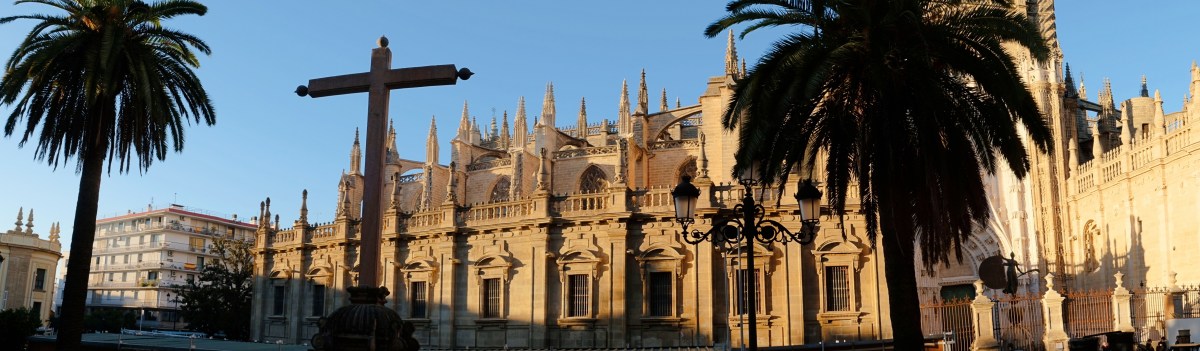
Dentro de la ciudad amurallada se encuentran dos edificios de influencia musulmana y de extrema importancia: Real de Alcázar, que en otro tiempo fue un palacio musulmán; y la Catedral de Sevilla que era una mezquita. Estos edificios son un claro ejemplo de la construcción de Sevilla basada en otras culturas, sin destrucción total, sino en evolución.

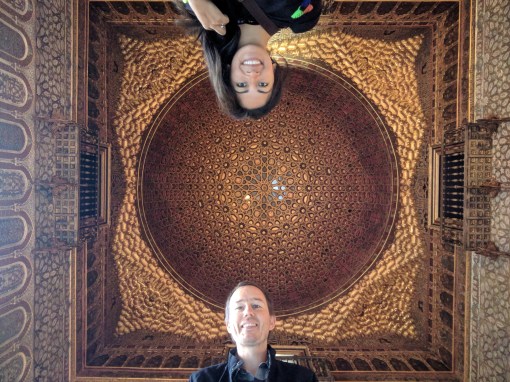
Puedes entrar gratis a Real de Alcazar los lunes después de las 3 p. m., Pero necesitas estar allí mucho antes debido a las grandes filas y el acceso restringido. Aquí, en Real de Alcázar, fui transportada de regreso a Marruecos. El edificio y la decoración inicial es igual a cualquier palacio musulmán. Lo que marca la diferencia son las adiciones posteriores a la decoración y las nuevas habitaciones hechas por los reyes españoles.


Mientras veía las adiciones a la decoración de en Real de Alcazar me preguntaba como se sentirían los musulmanes de ver que sus edificios se llenaron de imágenes y esculturas de santos y dioses. Lo que me lleva a recordar que cuando los musulmanes fueron vencidos y dejaron Sevilla, en ultimas acuerdos para desalojar el territorio, pidieron que su mezquita y su torre fueran destruidas, lo cual se les negó y hoy es un catedral católica
(Si quieres saber más acerca de medinas y palacios musulmanes, te invito a que leas mi post de Marrakech)


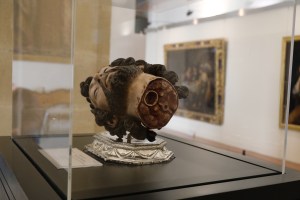
Archivo General de Indias
El Archivo General de Indias es también un buen ejemplo del uso de estructuras viejas y descuidadas para construir una ciudad mejor.


Mi visita al Archivo General de Indias me emocionó de una manera que nunca antes había sentido. Su olor a biblioteca vieja me erizo de los pies a la cabeza, y aún cuando veía gente entrar y salir sin darle más importancia que el de ser un edificio atractivo, yo entre con un sentimiento de reverencia, como si al dar un paso dentro de este edificio me encontraría con mi pasado. Así fue, no de una manera tan inmediata, pero encontré mucha información acerca del pasado de México y piezas que pertenecieron a nuestro primer emperador (así es, Mexico independiente comenzó como una monarquía mis amigos). Y aún cuando el tiempo me falto, descubrí que hay acceso a todo lo que ha sido digitalizado en su pagina oficial.
Aquí les dejo un pequeño documental acerca del Archivo General de Indias.
https://www.youtube.com/watch?v=Z3PqkFM2vGY
Si no tienen 15 min, aquí les dejo una semblanza mas pequeña.
https://www.youtube.com/watch?v=b0SHIavB4Pk
Sevilla Ciudad de Opera
No soy la única que se ha visto deslumbrada con la belleza de Sevilla. Personajes como Mozart, Rossini, Beethoven, y Bizet han creado Operas inspiradas y situadas en esta hermosa ciudad. Mientras caminas por sus callecitas pequeñas, comienzas a ver casas y lugares que parecen familiares, y de repente estas en un escenario de esas legendarias operas. Si estas inseguro de si el lugar sera mencionado en alguna opera o no, Sevilla a puesto señales en estos lugares para disipar dudas. Si no estas familiarizado con la opera, segura estoy que has escuchado melodías de Carmen, El Barbero de Sevilla, o El Matrimonio de Figaro; todas esas obras han sido ocupadas por disney mas de una vez, así que no puedes estar a salvo.


Además de operas muchísimas obras literarias, musicales, y pictóricas han sido inspiradas en Sevilla o creadas por artistas Sevillanos, pero nunca acabaría si menciono todas ellas. Alguien a quien no podemos dejar pasar es a Miguel de Cervantes. Él estuvo en Sevilla en su tiempo más prolífico, y se dice que escribió Don Quijote mientras estaba en la cárcel en Sevilla. ¿Por que? quien sabe Hay varias versiones del porque. La más común es que fue encarcelado debido a deudas con la corona; el banco donde Don Cervantes tenía el dinero que había colectado como impuestos para la corona española se fue a la bancarrota, y entonces no pudo pagar, así que lo mandaron a la cárcel. Hoy, solo un pequeño busto se encuentra en Sevilla para recordarlo.
El Río
Otra parte que me gusto mucho de Sevilla fue el area cercana al Canal de Alfonso Xlll, también conocida como el Arenal. Esta parte de la ciudad te hace sentir en una ciudad costera.
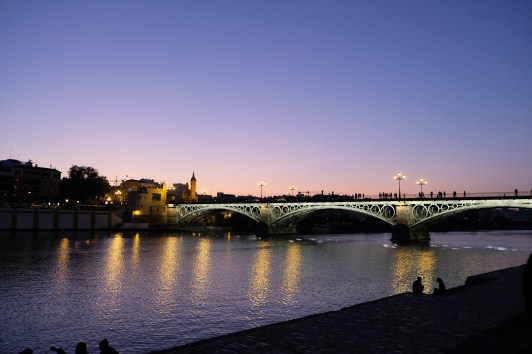
La caminata al lado del canal esta muy bien diseñada y siempre hay gente corriendo, jugando con sus perros, en bares al lado del canal, o gente sentada a la orilla del canal. Así como cualquier local, yo también me senté a disfrutar de la vista y de los atardeceres que se reflejan muy bellos en el agua; y me quede observando por largo tiempo los puentes tan estilizados del canal.


A lo largo del canal esta el Paseo de Cristobal Colón en el que pasas por el teatro de Sevilla, la plaza de toros, y el mercado Lonja del Barranco, en donde se come muy rico, con un ambiente super relajado.
Expansion de Sevilla
Otra área que vale mucho la pena visitar en Sevilla es la Real fabrica de tabacos y la Plaza España, que se encuentra dentro del Parque de Maria Luisa. La Real Fábrica de Tabacos es ahora la universidad de Sevilla, una vez más rehusando, y haciendo nuevo y práctico lo que se pudo haber desechado.
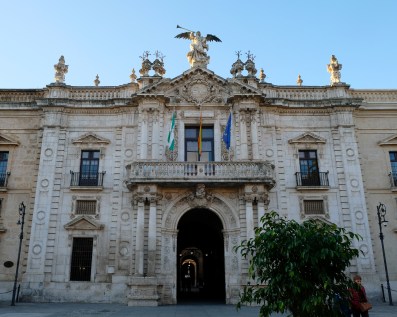
El Parque Maria Luisa fue construido para la exposición Ibero-Americana de 1929; la cual se celebro para mejorar las relaciones entre España y los países de america latina. Entre los muchos edificios construidos la Plaza España es sin duda uno de los mas representativos y bellos del parque.
Flamenco
¡Ver flamenco en Sevilla no tiene precio! Bueno, de hecho si lo tiene y es muy variado. Nosotros decidimos ir a Tablao de Gallos y no nos arrepentimos. Hay lugares que te ofrecen cena o tapas, pero siempre pasa que cuando combinas un show con cena alguno de los dos no es tan bueno, o los dos son “más o menos”. El show que vimos fue tan bueno que no me pude terminar mi trago en 90 minutos. En ciertos momentos me quedaba con el vaso de la mesa a mi boca por que los artistas eran tan buenos interpretes que me embobaba en el show y olvidaba que estaba por dar un sorbo al vaso. ¡Si! así de bueno fue el show.
Ahora, la historia del Flamenco es muy enredada, y no me siento capaz de hablar sobre ella. Lo que se es que es una mezcla de la cultura Al-Ándaluz y los gitanos que llegaron a esta región. Pero como todo, los sevillanos lo han adoptado muy gustosos, y Sevilla es el mejor lugar donde ver Flamenco en toda España y tal vez Granada, pero como no fui
Al final, nuestra estancia en Sevilla fue de lo mejor. Lo disfrutamos mucho y nos hizo enamorarnos nuevamente. A cualquier persona que este buscando un lugar romántico para su luna de miel o para un fin de semana con su pareja Sevilla los esta esperando con sus callecitas de ensueño, sus flores y sus olores.
Y si eso de ir a España no se te antoja tanto, les cuento lo que una sevillana me dijo “en Barcelona son catalanes, en Madrid son españoles, y aquí somos sevillanos.” Entonces no se toparan con los pretenciosos españoles los sevillanos no pretenden (o quieren) ser españoles puros, ni buscan en su pasado para decirse romanos o árabes o gitanos, los sevillanos son muy sevillanos y ¡ya!
Consejos Prácticos
1. Compra los boletos a sitios turísticos directo en la taquilla del lugar.
Los sitios de internet para conseguir tickets en Sevilla son de lo peor, no le encuentras pies ni cabeza y siempre terminan mandándote a los tours con guía oficial. El más barato de esos tours es de 52 euros. Si compras los boletos en taquilla varian en cada lugar pero van de los 4 a los 12 euros.
2. Adquiere todos tus boletos el mismo día o al final del día.
Esto va a ser algo tedioso, pero al final, después de estar en filas por horas un solo día que dediques a colectar tus tickets, el día que vallas a visitar el sitio elegido podrás escapar la fila. Cada lugar llega a tener filas de 200 personas antes de que abran, y esto en temporada baja; entonces, si tienes tu ticket en mano te dejan pasar con las pocas personas que: a) compraron el boleto carísimo en internet, b) tiene un guía privado, o c) como tú, fueron por su ticket el día anterior. Las filas son tan largas para entrar porque, como dije, es casi imposible comprar online y algunos lugares tienen un cupo limitado así que me toco ver antes de las 9:30 filas para entrar al alcazar de casi 200 personas. (De suerte nosotros llegamos a las 8am :S )
3. Checa los días y horas para visitas gratis de varios sitios.
Estos horarios cambian conn la temporada, pero todos los principales sitios turísticos tienen horarios gratis, la mayoría en lunes.
English
Seville is the most romantic city I’ve been at. Tiny streets surrounded by high walls, picturesque plazas full of flowers, parks with small fountains almost every other corner, a river surrounded by flowers and leafy trees, baroque buildings, carriages with well-groomed horses, and hundreds of orange trees all over the city that exude their blossoms aroma while we went out to enjoy the romanticism of the city at night.
The market of La Lonja del Barranco says it all with its slogan: We take care of the details. I think this is the slogan of the whole city; there is not a neglected or dirty corner in all Seville, the whole city is very well kept and presented. Even in their parks there are doves instead of pigeons! My camera was not enough to capture all that beauty, so I gave up. But the true reason to leave the camera behind was that Seville was a city that I rather discover holding Kevin’s hand instead of trying to take an image that would not capture the romantic essence of Seville.
Sevilla has the best of many worlds, and therefore it makes emphasis on it. Among the cultures that you can discover in Seville with just a glance to its architecture are the Roman, the Muslim, the Christian, and the French cultures. When you delve deeper into the history of the city, you realize that there is more than what the eye can observe, and you will also find the Mexican indigenous culture, the Indian culture, the Asian culture, the Portuguese culture, and many others. This is so because a while ago Seville was the center of the world. Or that they say
It was a pleasure, a respite, to be in a place where instead of disappearing the conquered culture is built with and from it. The best witnesses to this continuous evolution of Seville are Seville’s Cathedral, the Archivo General de Indias, and Real de Alcazar. You can see this transition in many places, its culture, its dances, its food, etc., but these three buildings are so palpable, rich in history, and alive that UNESCO declared them a World Heritage Site.
I do not want to romanticize history and give the bad impression that the passage from one dominant culture to the other was done peacefully, where has that ever happened, but what I emphasize is the conservation of those useful features of the culture conquered, not a complete wipe out of past cultures. This conservation of cultures, architecture, and diverse traditions is what has shaped Seville for thousands of years and what makes its style so unique.
What I am going to romanticize is Seville, the autumnal days in which searching for info about my little state, Tlaxcala, I found myself in a dream city. A city that is beautiful, cheerful, full of character and contrasts in its streets. A city that has grown without haste, that enjoys what it has and that is eager to share itself with you. Seville is like a person that you met by coincidence, and suddenly you realize that is the ideal friend you have been looking for because it reminds you of your loved ones, and at the same time, is fresh, and full of information that you did not know of things you knew
The walled city
As soon as we arrived in Seville, the similarities with Morocco were immediate. Unwittingly, I began to fall into a constant comparison between what was «Spanish» and what «Moroccan». Then, between what was «Spanish», what «Moroccan», what «gypsy», what «French Gothic», what «Roman», etc. At the end of my time in Seville, I realized that these comparisons were wrong, it was not a place with bits of here and there, but the streets, buildings, parks, decorations, food, and, in general, the culture is sevillana.
The central, and oldest, part of Seville is surrounded by walls, and has the same structure as a medina. This is so because Seville was a Muslim city. The entire Iberian peninsula was under Muslim power during the Middle Ages, during the period known as Al-Ándaluz near the year 711, but it was not until 1023 that Seville gained its definitive independence and constituted its own taifa (kingdom like organization), still of Muslim influence. Although Seville was Christianized later on, the center of the city was preserved and the walls then served the Spaniards for their own defense; however, they no longer referred to it as «medina» but instead became a «walled city».
Now, the walls are no longer used for protection against enemy attacks, but the walled city of Seville is perfect for romance. Its small cobbled streets, its gardens and squares full of orange and multicolored flowers, its alleys with fountains, and its thousands of balconies throughout the city lead you to dream about the perfection of love and romance. That’s why I appreciate that I was able to discover this city with Kev hand by hand, stopping to smell the jasmines and orange blossoms in our nocturnal walks; during which every day we discover a new cute plaza with its fountain, perfect for the 2 of us only, where we sat and listened to the water running while enjoying the fresh air and the image of the Cathedral of Seville illuminated. Meanwhile, the Giralda, all golden and bright, on top of the city told us (and sure to everyone roamming the city at night): Here I am, I’ll look out for you; let me participate in your romance, if someone comes to bother you, I’ll let you know, but let me enjoy with your looks, your caresses, and your childish kisses.
Also during the day it is a pleasure to walk around the walled part of Seville. During the day, you can better observe its architecture and the mosaics that are in almost every corner of the city. Also during the day you can enjoy the musicians who play in the streets of Seville, they are a treasure! Street musicians in Seville are so good that I do not understand why are they playing on the street. If you do not like to walk for hours, like me, you can sit and enjoy the people passing by in one of the many cafes, bars and restaurants; the tapas and raciones are very good. I have a recommendation here. Although paella it is not a dish from Seville, the one we ate was one of the best I had while in Spain; the restaurant is called La Cueva, and it specializes in Paella Valenciana.
Real de Alcazar & Cathedral of Seville.
Within the walled city are two buildings of Muslim influence and of extreme importance: Real de Alcazar, what at one time was a Muslim palace; and the Cathedral of Seville that was a mosque. These buildings are a clear example of the construction of Seville based on other cultures, without total destruction, but in evolution.
Real de Alcazar allows you to get in for free on Mondays after 3 pm, but you need to be there much earlier due to big cues and restricted access. Here, in Real de Alcazar, I was transported back to Morocco. The building and the inicial decoration is without a doubt the same than in any Muslim palace. What marks the difference is the later additions to the decor and new rooms made by the Spanish kings.
As I watched the additions to the decoration of Real de Alcazar, I wondered how Muslims would feel if they saw their buildings filled with images and sculptures of saints and gods. What lead me to remember that when the muslims were defeated and left Seville, in the last agreements they asked the spaniards to destroy the mosque and its tower, which was denied, and today the mosque is a Catholic Cathedral.
General Archive of the Indies
The Archivo General de Indias is also a fine example of the use of old and neglected structures to build a better city.
My visit to the General Archive of the Indies moved me in a way I had never known before. Its smell of old library shook me from head to toe, and even when I saw people come and go without giving it more importance than being an attractive building, I entered with a feeling of reverence, as if taking a step inside would present me in front of my past. So it happened, not in such an immediate way, but I found a lot of information about Mexico’s past and pieces that belonged to our first emperor (yup, independent Mexico began as a monarchy my friends). And even when I couldn’t have time to dive in in all that information, I discovered that there is access to everything that has been digitized on its official website.
Here is a small documentary about the Archivo General de Indias. (video in Spanish)
https://www.youtube.com/watch?v=Z3PqkFM2vGY
Seville City of Opera
I’m not the only one who has been dazzled by the beauty of Seville. Characters such as Mozart, Rossini, Beethoven, and Bizet created operas inspired in Seville, and in specific locations that are mentioned in them. As you walk through Seville’s small streets, you’ll see houses and places that seem familiar, and suddenly, you’ll find yourself in the stage of any of those legendary operas. And if you’re unsure of whether or not the place is mentioned in an opera, Sevilla has put signs to mark this “operatic” places. If you are not familiar with opera, I bet you have heard melodies from Carmen, the Barber of Seville, or The Marriage of Figaro, all those works have been occupied by Disney more than once, so you can not be safe of this sticky melodies.
In addition to operas, many literary, musical, and pictorial works have been inspired in Seville or created by Sevillian artists, but I would never end if I mention all of them. Someone we can not pass up, however, is Miguel de Cervantes. He was in Seville in his most prolific time, and is said that he wrote Don Quixote while he was in jail in Seville. Why? Who knows? There are several versions why. One is that he was incarcerated due to debts with the Spanish Crown; the bank where Don Cervantes had the money went bankrupt and could not pay what he had collected as taxes for the Crown , so he was sent to jail. Today, only a small bust remains in Seville to remember him.
The River
Another area of Seville that I enjoyed was the one near the Canal de Alfonso Xlll, also known as the Arenal. This part of the city makes you feel that you are in a coastal city.
The walk along the canal is very well designed, and you will find people running, playing with their dogs, at bars next to the canal, or people sitting along the way in the edge of the canal. I also sat at the edge of the canal, enjoyed the view and the sunsets reflected in the water, and stared at the stylized bridges of the canal.
Along the canal is Paseo de Cristobal Colón, where you pass through the theater of Seville, the bullring, and the Lonja del Barranco market, where you can eat delicious dishes in a relaxed atmosphere.
Seville’s expansion
Another area that is worth visiting in Seville is the Real Manufacture of Tobaccos and Plaza España, which is located inside the María Luisa Park. The Royal Tobacco Factory is now the University of Seville; once again reusing and, making anew and practical what could have been discarded.
Maria Luisa’s Park was built for the Ibero-American exhibition of 1929; which was held to improve relations between Spain and the Latin American countries. Among the many buildings built in the park, the Plaza de España is undoubtedly the most representative and beautiful one.
Flamenco
Seeing flamenco in Seville is priceless! Well, in fact it does have a price, and it is very varied. We decided to go to Tablao de Gallos and we do not regretted it. There are places that offer dinner or tapas, but it always happens that when you combine a show with dinner one of the two is not so good, or both are “so so”. The show we saw was very good, so good that I could not finish my drink in 90 minutes. At certain times, I was left with the glass off the table half way to my mouth because the artists were such good interpreters that I was drowned in the show and forgot that I was about to take a sip of the glass. Yes! That’s how good the show was.
Now, Flamenco’s history is very tangled, and I do not feel able to talk about it. What I know is that it is a mixture of Al-Ándaluz culture and the gypsies that came to this region. But like everything else, the locals have adopted it, and Seville is the best place to see Flamenco in all of Spain and maybe Granada, but as I did not go I cannot tell
In the end, our stay in Seville was great. We enjoyed the city a lot, and it made us fall in love again. Anyone who is looking for a romantic place for their honeymoon, or for a romantic weekend with their partner Sevilla is waiting for you with its dreamy streets, its flowers, and its fragrances.
And if going to Spain does not seem appealing, I’ll tell you what a woman from Seville told me «in Barcelona people are Catalan, in Madrid they are Spaniards, and here,well, we are Sevillanos”. Then you’ll not run into the pretentious Spaniards people from Seville do not pretend (or want) to be pure blood Spaniards, neither do they look in their past to be Roman or Arabs or gypsies, the Sevillanos are Sevillanos and that’s it!
Practical tips
1. Buy tickets to tourist sites directly at the ticket office of the place.
The websites to get tickets in Seville are the worst; they are very inconspicuous, and at the end, you’re always sent to the tours with official guides. The cheapest of these tours is 52 euros; If you buy tickets at the place, they vary in price depending of the place, but they go from 4 to 12 euros.
2. Acquire all your tickets the same day.
This is going to be somewhat tedious, but in the end, after being in different lines for some hours a single day that you dedicate to collect your tickets, the day you go to visit the chosen site you can escape the line. The main touristic attractions have lines of about 200 people before they open, and this in the low season; then, if you have your ticket in hand you’ll be able to pass with the few people who: a) bought the expensive ticket online, b) have a Private guide, or c) like you, went for their tickets the day before.
3. Check the days and hours for free visits from various sites.
These schedules change with the season, but all of the mayor attractions have free days, met of them on Monday.
 De Camino